
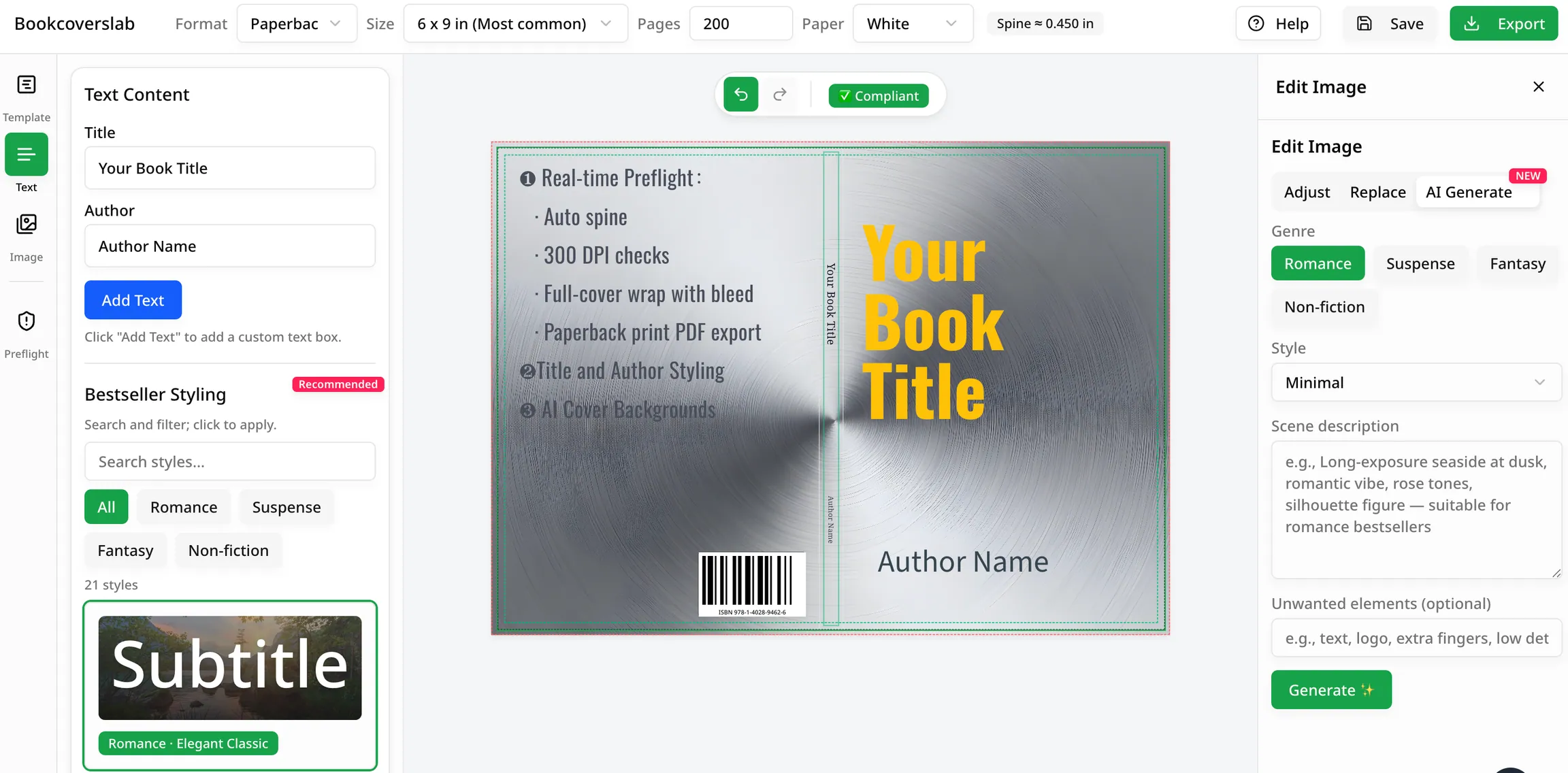
Prompty AI do okładek romansów dopasowane do podgatunku
Krótka odpowiedź brzmi: najlepsze prompty AI do okładek romansów nie zaczynają się od „zrób mi romantyczną okładkę”. Zaczynają się od dokładnej obietnicy, którą czytelnik ma poczuć w ciągu jednej sekundy.
Ta obietnica zwykle wynika z czterech zmiennych:
- Podgatunek: romans współczesny, dark romance, historyczny, paranormalny, komedia romantyczna, romans z miliarderem, małe miasteczko i inne
- Poziom zmysłowości: słodki, średni, wysoki, niebezpieczna obsesja
- Rodzaj sceny: intymne zbliżenie, symboliczny obraz nastroju, luksusowe miejsce, nadprzyrodzona sceneria
- Czytelność miniatury: wyraźna struktura, która później pozwoli zbudować hierarchię tytułu
To ważne z prostego powodu. Czytelnicy romansów bardzo szybko rozpoznają wzorce. Nie potrzebują pełnego wyjaśnienia. Potrzebują okładki, która od razu wydaje się właściwa.
Jeśli chcesz bezpośrednio przetestować te kierunki, zacznij od Generatora okładek romansów AI. Jeśli wolisz najpierw użyć szerszego narzędzia, wypróbuj także główny generator okładek książek AI i porównaj romans z innymi kierunkami gatunkowymi.
Dlaczego większość promptów AI do romansów wypada słabo
Słabe prompty zwykle zawodzą na jeden z trzech sposobów:
- Są zbyt ogólne, więc efekt przypomina uniwersalną literaturę kobiecą albo ilustrację fantasy.
- Opisują wygląd, ale nie napięcie emocjonalne.
- Tworzą ładny obraz bez miejsca na późniejszą hierarchię tytułu.
Dlatego „piękna romantyczna para, okładka książki, wysoka jakość” rzadko daje kierunek gotowy na rynek. Model nie wie, czy książka ma być ciepła i pełna nadziei, mroczna i obsesyjna, elegancka i historyczna czy magiczna i przeznaczona losem.
W romansie precyzja wizualna jest ważniejsza niż poetyckie brzmienie promptu.
Krótka formuła mocniejszych promptów AI do okładek romansów
Użyj tej struktury:
[Podgatunek] + [napięcie emocjonalne] + [sceneria] + [paleta / światło] + [cel kompozycji] + „bez tekstu”
Przykład:
współczesny romans w małym miasteczku, delikatna tęsknota, nadmorska piekarnia o wschodzie słońca, paleta różu i kremu, czysta kompozycja frontowej okładki z miejscem na tytuł, bez tekstu
Ta formuła daje znacznie większą kontrolę niż ogólne hasło „okładka romansu”, ponieważ mówi modelowi:
- jaki to rodzaj romansu
- jak intensywna ma być energia relacji
- jakiego świata wizualnego oczekuje czytelnik
- jak zostawić miejsce na końcowy etap wydawniczy
Prompty AI do okładek romansów według podgatunku
Romans współczesny
Używaj współczesnych promptów, gdy obietnicą książki jest bliskość emocjonalna, możliwość utożsamienia się, atrakcyjny styl życia albo ciepła chemia.
Przykład promptu
okładka współczesnego romansu, elegancki miejski taras o zachodzie słońca, intymny kontakt wzrokowy, szampańska poświata, różowo-złota paleta, luksusowy lecz ciepły nastrój, czysta kompozycja, bez tekstu
Najlepsze zastosowania
- romans z miliarderem
- romans w miejscu pracy
- romans drugiej szansy
- romans z celebrytą
Najlepsze sygnały wizualne
- ciepłe naturalne światło
- czysta, modna stylizacja
- wyraźna energia między bohaterami
- nowoczesne otoczenie, które nie dominuje nad relacją
Dark romance
Dark romance wymaga innej obietnicy emocjonalnej. Obraz powinien sugerować niebezpieczeństwo, obsesję, tajemnicę, nierównowagę sił albo zakazane przyciąganie.
Przykład promptu
grafika na okładkę dark romance, luksusowy penthouse o północy, intensywna chemia, czarny aksamit i karmazynowa paleta, dramatyczne cienie, niebezpieczna elegancka atmosfera, filmowa kompozycja okładki, bez tekstu
Najlepsze zastosowania
- zakazany romans
- romans mafijny
- historie z moralnie niejednoznacznym bohaterem
- obsesyjne relacje z antybohaterem
Najlepsze sygnały wizualne
- czerń, karmazyn, kolor wina lub metaliczny kontrast
- twarde światło i cień
- luksusowe miejsca albo niebezpieczne otoczenie
- więcej intensywności niż delikatności
Romans historyczny
Okładki romansów historycznych nadal szybko sprzedają atmosferę. Czytelnik chce zobaczyć, że historia rozgrywa się w innym świecie, zanim jeszcze przeanalizuje fabułę.
Przykład promptu
okładka romansu historycznego, sala balowa z epoki regencji przy świecach, haftowana suknia, powściągana tęsknota, paleta kości słoniowej i złota, elegancka kompozycja z miejscem na tytuł szeryfowy, bez tekstu
Najlepsze zastosowania
- romans regencyjny
- romans wiktoriański
- romans arystokratyczny
- aranżowane małżeństwa i historie zalotów
Najlepsze sygnały wizualne
- światło świec
- bogate tekstury
- suknie, mundury, biżuteria i posiadłości
- najpierw elegancja, potem niebezpieczeństwo
Romans paranormalny
Romans paranormalny działa wtedy, gdy prompt równoważy romantyczność i elementy nadprzyrodzone. Jeśli dominuje magia, efekt może zmienić się w czystą fantastykę. Jeśli dominuje chemia bez sygnałów świata przedstawionego, obraz może wyglądać jak ogólny romans.
Przykład promptu
obraz na okładkę romansu paranormalnego, leśna polana w świetle księżyca, świecące runy, napięcie między przeznaczonymi sobie partnerami, srebrno-niebieskie magiczne światło, zmysłowa i mistyczna atmosfera, kompozycja frontowej okładki, bez tekstu
Najlepsze zastosowania
- romans z wampirem
- romans z wilkołakiem lub zmiennokształtnym
- romans z czarownicą
- romans fae
- historie o magicznej więzi
Najlepsze sygnały wizualne
- światło księżyca i efekty poświaty
- symbole, pazury, skrzydła albo motywy nadprzyrodzone
- palety niebiesko-fioletowe, srebrne lub nocne
- widoczna chemia, nie tylko widowisko fantasy
Jak sterować poziomem zmysłowości bez utraty gatunku
Przydatna metoda polega na zmianie tylko intensywności emocjonalnej i pozostawieniu reszty promptu bez zmian.
Skorzystaj z tej prostej tabeli:
| Poziom zmysłowości | Język do podkreślenia w prompcie | Oczekiwany efekt wizualny |
|---|---|---|
| Słodki / zamknięte drzwi | czuły, ciepły, pełen nadziei, miękki, figlarny | jaśniejsza paleta, bezpieczna mowa ciała, przystępny nastrój |
| Średni | tęsknota, napięcie, intymność, magnetyzm | silniejsza chemia i nieco większy kontrast, nadal emocjonalna otwartość |
| Wysoki / dark | obsesyjny, niebezpieczny, intensywny, zakazany | więcej cienia, bogatsza paleta, mocniejsza mowa ciała i ostrzejsze napięcie |
To szczególnie przydatne w kategoriach romansu, w których oczekiwania są precyzyjne. Mocny dark romance nie powinien wyglądać jak komedia romantyczna w piekarni, a łagodny romans z małego miasteczka jak thriller mafijny z pocałunkami.
Szczegóły, które zwykle poprawiają okładki romansów generowane przez AI
Jeśli pierwsze wyniki nadal nie pasują, dopracuj te części promptu:
- Dodaj energię relacji: tęsknota, napięcie, zabawa, zakazane pragnienie, bezpieczeństwo emocjonalne
- Dodaj konkretną scenerię: sala balowa, księgarnia, zaśnieżony las, penthouse, winnica, nadmorski klif
- Dodaj paletę: róż, różowe złoto, karmazyn i czerń, kość słoniowa i złoto, srebrny błękit
- Dodaj cel kompozycji: kompozycja frontowej okładki, czyste miejsce na tytuł, pionowe 2:3, bez tekstu
- Dodaj cel rynkowy: nastrój bestsellerowego romansu, obraz premium, natychmiastowy efekt emocjonalny
Ostatni element ma znaczenie. Nie prosisz modelu o zwykłą ilustrację. Prosisz o kierunek okładki, który może sprzedawać książkę.
Co zrobić, gdy prompt już działa
Nawet świetne prompty AI do okładek romansów rozwiązują tylko problem koncepcji. Nie rozwiązują końcowej produkcji.
Gdy znajdziesz właściwy koncept:
- Zachowaj wersję, która najlepiej oddaje obietnicę podgatunku.
- Zbuduj finalną okładkę z typografią zgodną z konwencjami romansu.
- Sprawdź, czy punkt centralny nadal działa po umieszczeniu tytułu.
- Dokończ geometrię oprawy miękkiej lub twardej w procesie produkcyjnym.
Na tym ostatnim etapie wielu autorów traci czas. Obraz może wyglądać na gotowy, ale plik nadal potrzebuje formatu cięcia, spadu, logiki grzbietu i układu tylnej okładki. Przenieś wtedy wybrany koncept do KDP Cover Creator, aby obraz romansu i końcowy układ do druku pozostały spójne.
Prosty proces do wykorzystania przy każdym tytule romansowym
Jeśli nie chcesz komplikować każdej książki, ta kolejność działa dobrze:
- Zacznij od jednego podgatunku i jednego poziomu zmysłowości.
- Wygeneruj od 3 do 6 wariantów promptu wokół tej dokładnej obietnicy.
- Odrzuć wszystko, co jest ładne, ale emocjonalnie nietrafione.
- Zachowaj kierunek, który jest czytelny nawet jako mała miniatura Amazon.
- Finalizuj okładkę dopiero wtedy, gdy obietnica wizualna jest stabilna.
To także najlepszy powód, aby użyć dedykowanego Generatora okładek romansów AI zamiast ogólnego placu zabaw z promptami. Skraca drogę między „mam pomysł” a „wiem, jaki kierunek romansu naprawdę pasuje do tej książki”.
FAQ
Czy prompty AI do romansów wystarczą do stworzenia finalnej okładki KDP?
Nie. Świetnie nadają się do tworzenia koncepcji, ale finalna okładka nadal potrzebuje typografii, logiki formatu, obsługi grzbietu i konfiguracji eksportu.
Czy lepiej używać twarzy bohaterów, czy symbolicznych obrazów romantycznych?
Zależy to od podgatunku i rynku. Niektóre kategorie dobrze reagują na bezpośrednią chemię i energię postaci. Inne działają lepiej z symbolicznym luksusem, nastrojem lub atmosferą. Właściwy jest sygnał, który Twoi czytelnicy rozpoznają najszybciej.
Ile promptów należy przetestować?
Zwykle wystarczy od 3 do 6 dobrych wariantów. Większa liczba często tworzy szum zamiast jasności.
Co jest ważniejsze: prompt czy końcowe opracowanie tytułu?
Oba elementy są ważne, ale wiele okładek romansów traci profesjonalny wygląd właśnie na etapie tytułu. Prompt wybiera kierunek emocjonalny. Typografia kończy sygnał rynkowy.
Powiązane materiały
- Generator okładek romansów AI
- Generator okładek książek AI
- KDP Cover Creator
- Generator tytułów książek AI
- Kalkulator rozmiaru okładki KDP
Podsumowanie
Najlepsze prompty AI do okładek romansów nie są najbardziej rozbudowane. To te, które dokładnie mówią modelowi, jaką romantyczną obietnicę ma złożyć książka.
Zacznij od podgatunku, kontroluj poziom zmysłowości, wybierz scenę rozpoznawalną dla czytelnika i zostaw miejsce na końcowe opracowanie tytułu. Dzięki temu AI staje się partnerem w tworzeniu pomysłów na okładkę, a nie maszyną do losowych obrazów.
Autor

Kategorie
Więcej wpisów
Jak sformatowac coloring book dla KDP: od luznych stron do print-ready interior PDF
Dowiedz sie krok po kroku, jak sformatowac coloring book dla KDP. Zamien luzne strony w print-ready interior PDF z poprawnym trim, blank backs, kolejnoscia stron i eksportem.
Najlepsze bezpłatne generatory okładek książek AI w 2026 r
Porównaj najlepsze bezpłatne generatory okładek książek AI dla autorów w 2026 r. Zobacz, które narzędzia są najlepsze pod względem pomysłów, dopasowania gatunkowego i przepływów pracy gotowych do KDP, w tym BookCoversLab.
Okładka KDP w złym rozmiarze w serwisie Canva? Oto łatwa poprawka
Błędy odrzucenia KDP? Dowiedz się, dlaczego okładka książki w serwisie Canva ciągle ma niewłaściwy rozmiar dla KDP (to kręgosłup i krwawienie!) i odkryj proste, odporne na błędy rozwiązanie.
Newsletter
Dołącz do społeczności
Zapisz się do naszego newslettera, aby otrzymywać najnowsze wiadomości i aktualizacje